This is default featured slide 1 title

Go to Blogger edit html and find these sentences.Now replace these sentences with your own descriptions.

This is default featured slide 2 title

Go to Blogger edit html and find these sentences.Now replace these sentences with your own descriptions.

This is default featured slide 3 title

Go to Blogger edit html and find these sentences.Now replace these sentences with your own descriptions.

This is default featured slide 4 title

Go to Blogger edit html and find these sentences.Now replace these sentences with your own descriptions.

This is default featured slide 5 title

Go to Blogger edit html and find these sentences.Now replace these sentences with your own descriptions.

PHARMACOLOGY QUIZZES 59 | Multiple Choice Questions| Medical Exam Preparations

01. Indinavir belongs to the class of following drugs?
A. Antiviral 
B. Antipyretic 
C. Antiprotozoal
D. Antibiotics 
E. Anti malaria 

Answer: A. Antiviral  


02. Zalcitabine belongs to the class of following drugs?
A. Antiviral 
B. Antipyretic 
C. Antiprotozoal
D. Antifungal  
E. Anti malaria 

Answer: A. Antiviral 


03. Which of the following drug is used as Mast Cell Stabilizers?
A. Sodium Cromoglycate
B. Montelukast
C. Ipratropium Bromide
D. Salbutamol
E. Terbutaline

Answer: Sodium Cromoglycate

04. Which of the following drug is Leukotriene Antagonist?
A. Sodium Cromoglycate
B. Montelukast
C. Ipratropium Bromide
D. Salbutamol
E. Terbutaline

Answer: Montelukast 

05. Immune related problem is  one of the following?
A. High Blood pressure 
B. Fever 
C. Aids
D. Headache 

Answer: C. Aids

06. Peripheral resistance is linked with  one of the following  issue?
A. Blood pressure 
B. Fever 
C. Aids
D. Headache 

Answer: A. Blood pressure

07. A drug adheres to an ulcer Crater & works as a protective layer by forming a barrier against gastric acid?
A. Cimetidine
B. omeprazole
C. Rabeprazole
D. Sucralfate

Answer: D. Sucralfate

08. Which one of the following adverse effects is linked with first-generation H¹ antihistamines?
A. Less appetite
B. Hypertension
C. Urinary retention
D. Bradycardia

Answer: C. Urinary retention


09. Which of the following drugs block the GP IIb/IIIa receptor of platelets?
A. Abciximab
B. Eptifibatide
C. Tirofiban
D. A & B
E. All of the above

Answer: E. All of the above

10. An antiviral drug that inhibits the viral neuraminidase?
A. Rimantadine
B. Cidofovir
C. Penciclovir
D. Zanamivir

Answer: D. Zanamivir

11. Which one of the following drugs has abortifacient properties?
A. Cimetidine
B. Rabeprazole
C. Misoprostol
D. Sucralfate

Answer: C. Misoprostol 

12. Following drug causes Systemic acidosis by binding with cations in antacid?
A. Alendronate
B. Metamucil
C. Sevelamer  
D. Sodium polystyrene sulfonate 
E. A & B

Answer: D. Sodium polystyrene sulfonate 

13. Which one of the following statements about the use of Aspirin is wrong?
A. Inhibit inflammation
B. Causes Interstitial nephritis
C. Increases alveolar ventilation
D. Repress the sensation of pain

Answer: B. Causes Interstitial nephritis

14. Which of the following options is the adverse effect of Vancomycin?
A. Fever
B. Redman syndrome
C. Phlebitis
D. Chill's
E. All of the above

Answer: E. All of the above

15. Taste and visual disturbance is the adverse effect of the following drug?
A. Nystatin
B. Griseofulvin
C. Terbinafine
D. Miconazole

Answer: C. Terbinafine

16. Which of the following activity of Acetaminophen is weak?
A. Antipyretic 
B. Anti inflammatory 
C. Analgesic 
D. A & B
E. A & C

Answer: B. Anti inflammatory

17. Which one of the following drugs binds with dietary phosphate & prevents its absorption?
A. Calcitonin 
B. Rabeprazole
C. Acetazolamide 
D. Furosemide 
E. Sevelamer 

 Answer: E. Sevelamer

18. Which one of the following statements about the use of Alpha-1 selective competitive blockers is wrong?
A. Inactive product of Doxazosin appears in feces
B. Produce orthostatic hypotension resulting syncope (first dose effect)
C. Increase CHF when used as monotherapy
D.  Silodosin has a selectivity for  Alpha-1b receptors
E. Alfuzosin indicated for benign prostatic hyperplasia

Answer: D. Silodosin has a selectivity for Alpha-1b receptors


19. Peripheral neuritis is caused by deficiency of the following vitamin?
A. Pyridoxine
B. Retinol
C. Cholecalciferol
D. Citric acid

Answer: A. Pyridoxine

20. Parasympathetic preganglionic fibers arise from sacral region S2 to S4 as well as cranial nerve III, VII, IX and X. Cranial nerve VII called?
A. Oculomotor
B. Facial 
C. Glossopharyngeal
D. Vagus

Answer: B. Facial 
A. Oculomotor III
B. Facial VII
C. Glossopharyngeal IX
D. Vagus X


21. A drugs decrease the migration of granulocytes into the affected area Also Block cell division by binding to mitotic spindles?
A. Sulindac
B. Allopurinol
C. Colchicine
D. Probenecid


Answer: Colchicine

Metformin Uses | Mechanism of Action | ADRs | Dose | Diabetes Mellitus

  Metformin

Common Brands: (Glucophage, Glucophage XR, Fortamet, Glumetza)

Metformin Uses | Mechanism of Action | ADRs | Dose | Diabetes Mellitus |

Biguanides

It is also known as an insulin sensitizer because it increases glucose uptake and utilization by target tissues.  That is why it's called an insulin sensitizer as it decreases insulin resistance but it does not secrete insulin. Only one biguanide is available as metformin to control glycemic management of type 1 diabetes mellitus or type 2 Diabetes Mellitus. The main target of metformin is fasting glucose levels. Metformin is recommended to be initialed at diagnosis of type 2 diabetes mellitus.

Mechanism of action of metformin

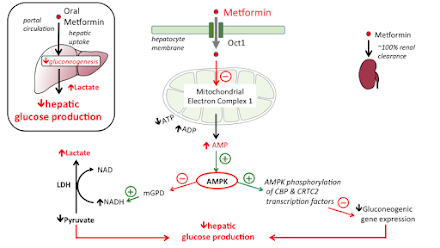
1.   Metformin work by inhibiting hepatic gluconeogenesis leading to the reduction of hepatic glucose output.

2.   It Also slows down intestinal absorption of glucose as a minor role in diabetes mellitus.

3.   It Also enhances glucose uptake by fat and muscles leading to increase insulin sensitivity.

4.   Metformin also has the ability to reduce hyperlipidemia.


Metformin Uses | Mechanism of Action | ADRs | Dose | Diabetes Mellitus |

Important Note:

In Type 2 diabetes mellitus, the liver produces excess glucose that becomes the major reason for high glucose levels in patients. Patients lose weight because of loss of appetite.

Blood Glucose Levels:

Diabetes in nonpregnant adults and children

  •       Fasting blood glucose   126mg/dL
  •      Random blood glucose and symptoms of hyperglycemia   200 mg/dL
  •       A1c   6.5%
  •       Oral glucose tolerance test (OGTT) using an oral glucose load equivalent to 75g anhydrous glycerin dissolved in water: > 200 mg/Dl


Metformin Doses:

  • 500 mg once or twice daily with meals.

Metformin has a 6-hour duration of action. It should be discontinued when the Scr for females is > 1.4 and for males >1.5mg.


Metformin Uses | Mechanism of Action | ADRs | Dose | Diabetes Mellitus |

Adverse effect 

Up to 30% of patients using metformin are affected by gastrointestinal effects. These effects can be reduced or minimized by taking the drug with food, by starting the drug in low doses.

      1.   Transient Nausea
2.   Abdominal cramping ( typically lasts up to 2 weeks)
3.   Lactic acidosis ( rare but fatal)
4.   Weight loss ( it’s a minimal effect that occurs initially but not a continued effect)
5.   Metallic taste
6.   Sweating
7.   Metformin also reduces vitamin B12 levels. So monitoring of Vit. B12 levels required.
8.   Hypoglycemia when used in combination with other drugs.


Contraindications:

1. Contraindicated in renal/hepatic disease due to the potential for lactic acidosis. (does not cause renal impairment itself)

  •       Acute myocardial infarction
  •      Alcoholism

Enlist the factors responsible for variation in drug responses?


Factors responsible for variation in drug responses:

1. Alteration in the concentration of drug that reaches the receptors

2. Variation in concentration of endogenous ligands 

3. Alteration in number or function of receptors 

4. Changes in components of response distal to the receptor

Acetaminophen | Mechanism of Action | USES | Adverse Effecs

Acetaminophen

Acetaminophen is also known as paracetamol. Acetaminophen doesn't increase clotting time of blood and does not have an effect on platelet function. It's an antipyretic and analgesic drug recommended especially in those patients who are already suffering from gastric disease. A drug for mild to moderate pain and to reduce fever. This drug is recommended especially for osteoarthritis patients as a first-line therapy group of the knee and hip. It has minimal anti-inflammatory activity and can't be used to reduce swelling or stiffness during rheumatoid arthritis.


1. Antipyretic Activity of Acetaminophen 

Acetaminophen and Aspirin decrease the increased temperature of the body by interfering with the release and synthesis of PGE2 that causing an increase in the body temperature. Acetaminophen and Aspirin lower the body temperature of patients by resetting the Thermostat towards a normal state by the release of heat in the form of sweat and peripheral vasodilation.

2. Analgesic Activity of Acetaminophen 

When inflammation occurs, Prostaglandin E2 causes the sensitization of Nerve ending in the action of histamine, bradykinin, and other chemical mediators that are released locally as a result of the inflammation. Acetaminophen and Aspirin decrease the synthesis of Prostaglandin E2, thus results repress the pain sensation. 

Dosage of Acetaminophen 

Acetaminophen is available in 325mg and 500mg. A prolonged dosage form caplet of 650 mg is also available.


Dose for Adults 

1. 500mg to 1000mg dose is recommended three times a day. 
2. Maximum 4000mg dose per day for pain. It should be given not more than 10 days for the pain and not more than 3 days for fever.
3. For Osteoarthritis patients 4000mg four times can be given.

Dose for children (6 years or above)

1. 325mg is recommended every 4 to 6 hours as needed.
2. Maximum dose is 1600mg per day for no longer than 5 days for the pain and 3 days for fever and 2 days for sore throat.

Note:
1. Acetaminophen is recommended for Gastrointestinal Disturbance sensitive patients.
2. The patients having bleeding problems 
3. The patients hypersensitive to Salicylates 

Adverse effects of Acetaminophen 

At normal Doses 
When we talk about the adverse effects of acetaminophen at normal therapeutic doses it's virtually free of any significant adverse effect. But infrequently 
I. Skin rash 
II. Allergic reaction may occur 
III. Altered leukocytes count (minor and transient)

At High Doses 
When high doses of Acetaminophen are used it causes the following:
I. Depletion of glutathione in the liver 
II. Hepatic necrosis 
III. Renal tubular necrosis 
IV. Hypoglycaemic coma

Note: High doses of acetaminophen required periodic monitoring of liver enzymes test.

Precautions 
Chronic administration of Acetaminophen is contraindicated in Liver diseases, Viral hepatitis, and active alcoholism. Chronic 5 g or acetaminophen used for one month or more on a daily basis leads to liver damage. Acute administration of 10g or more is hepatotoxic.

How does Acetaminophen cause toxicity when overdosed?

Acetaminophen form inactive glucuronidated or sulfated metabolites by conjugation in the liver. On the other side, Acetaminophen is also hydroxylated to form N-acetylbenzoiminoquinone. This hydroxylated form is a very dangerous metabolite of Acetaminophen that reacts with sulfhydryl groups of glutathione during normal doses and circumstances. 
When high doses of acetaminophen are used then the glutathione available in the liver is depleted and N-acetylbenzoiminoquinone reacts with the sulfhydryl group of hepatic proteins by forming covalent bonds. This leads to hepatic necrosis.

How does N-acetylcysteine work as an antidote?

NAC also contains sulfhydryl groups to which toxic metabolites start reacting. When NAC is administered these metabolites like N-acetylbenzoiminoquinone start reacting with sulfhydryl groups of NAC instead of reacting with sulfhydryl groups of hepatic proteins. This drug should be administered within 10 hours of the Acetaminophen overdose.


Why does acetaminophen have weak anti-inflammatory activity?

Acetaminophen has very less and weak anti-inflammatory activity because acetaminophen has less effect on cyclooxygenase in peripheral tissues.

Why Acetaminophen is preferred over Aspirin?

Aspirin causes damage to the stomach lining thus causing GI bleeding and this adverse effect is universal when patients are treated with Salicylates. That's why Acetaminophen is the preferred drug in those patients who already are suffering from stomach disease and gastric complaints.

Antidote of Acetaminophen

Introduction
Acetaminophen has antipyretic and analgesic properties because it inhibits prostaglandin synthesis in the CNS leading to a decrease in body temperature. Acetaminophen lacks the property of anti-inflammatory or has a very less effect. Acetaminophen is an alternative therapy to aspirin. The patients who do not need anti-inflammatory effects acetaminophen is a perfect choice. It does not have antiplatelet activity so it's a good choice in patients who do not need prolongation of bleeding time.

Clinical Presentation
There are  3 phases of clinical presentation after acetaminophen toxicity.
1. Phase I ( 12 to 24 hours post-ingestion)
  • Nausea, Vomiting, anorexia, diaphoresis
  • Asymptomatic
  • Nausea, abdominal pain, progressive evidence of hepatic failure, coma, and death

The antidote to Acetaminophen: 
N-Acetyl Cysteine
Acetaminophen Half-Life:
Acetaminophen has a half-life of 2-3 Hours and is well absorbed from the GIT.
Causes: 
Liver Failure, Coma, Diaphoresis
Acetaminophen USES:
Acetaminophen is an antipyretic and analgesic agent. Acetaminophen produces dangerous liver toxicity because of toxic metabolites.
NAC is an antioxidant. It’s a prodrug to L-cysteine. NAC provides cysteine for Glutathione synthesis. This glutathione reacts with N-Acetyl-P-Benzoquinone imine to protect tissues. NAPQI is a byproduct that is produced during the metabolism of Acetaminophen. Normally, When a drug is taken this NAPQI is Produced in small amounts. Then soon after its production quickly detoxified the Liver. But when acetaminophen is taken in large quantities or used excessively, then the reserved glutathione is not enough to deactivate this N-Acetyl-P-Benzoquinone imine. Thus the presence of NAPQI in large quantities reacts with the tissues of the liver and causes damage to the liver. This NAC maintains the quantity of glutathione in the body.
Adverse effects
With normal dose, 
  1. Skin Rash
  1. Minor allergic reaction
  1. Minor alteration in leukocyte count
  1. Hepatic necrosis
  1. Renal Tubular necrosis


Antidote of Acetaminophen & How it works?

2. Phase II ( 1 to 4 days post-ingestion)
3. Phase III ( 2 to 3 days in untreated patients)

With a large dose,

Aspirin | Mechanism Of Action | Low Dose vs High Dose | Adverse Drug Reactions

 Aspirin 
Introduction 
Aspirin is a weak organic acid. Aspirin is the only one among  NSAIDs that effects irreversibly results in the inactivation of the cyclooxygenase enzyme. Aspirin is also called Acetylsalicylic acid. When a tablet of Aspirin is taken, aspirin is converted to salicylates by the esterase enzyme because of rapid deacetylation inside the body. These salicylates work as have anti-inflammatory, antipyretic, and analgesic effects.


Function of Salicylates 

Blockage of prostaglandin synthesis at thermoregulatory centers.
Inhibition of prostaglandins at peripheral target sites.
Prevents pain sensitization receptors to both chemical stimuli and mechanical stimuli.
Salicylates (Aspirin) depress pain stimuli at subcortical sites ( thalamus and hypothalamus).
Important Note:
Salicylate at low doses exhibit analgesic activity but at higher doses, it shows the anti-inflammatory activity as well.
Aspirin 
Mechanism of Action 
Aspirin is a weak organic acid and inhibits cyclooxygenase irreversibly. Salicylate that has analgesic, antipyretic and anti-inflammatory properties is produced in the body by rapid deacetylation by esterases.  These salicylates block the synthesis of prostaglandins leading to the prevention of pain receptors sensitization, block prostaglandin synthesis at thermoregulatory centers in the hypothalamus and at peripheral target sites.
Aspirin has the following three major therapeutic activities:

Antipyrexia
Analgesic 
Anti-inflammatory 

1. Antipyretic Action 
Aspirin decrease the increased temperature of the body by interfering with the release and synthesis of PGE2 that causes an increase in the body temperature. Aspirin lowers the body temperature of patients by resetting the Thermostat towards a normal state by the release of heat in the form of sweat and peripheral vasodilation.

Note: Body temperature is controlled by the hypothalamus whenever a pyrogen such as a cytokine is released from white cells because of any infection inside the body, this causes an increase in the synthesis of PGE2. Thus fever occurs when the anterior hypothalamic thermoregulatory center set point is increased.
2. Analgesic 
When inflammation occurs, Prostaglandin E2 causes the sensitization of Nerve ending in the action of histamine, bradykinin, and other chemical mediators that are released locally as a result of the inflammation. Aspirin decreases the synthesis of Prostaglandin E2, thus results repress the pain sensation. 
3. Anti-inflammatory 
Aspirin inhibits the activity of cyclooxygenase leading to a decrease in the level and synthesis of prostaglandins. As the prostaglandins synthesis diminishes, Aspirin inhibits the inflammatory response of prostaglandins.

Difference between Low dose aspirin and high dose Aspirin
Low Dose Aspirin (60-80 mg daily)
Effects of Aspirin on Platelets
The low dose of Aspirin irreversibly inhibits thromboxane production in platelets. This occurs by acetylation of cyclooxygenase. Due to the inhibition of thromboxane, platelet aggregation is reduced. Because thromboxane increases the aggregation of platelet along with other factors. This lack of thromboxane in the platelet remains till the lifetime of the platelet (3-7 days) because the platelet doesn't have nuclei so they can not synthesize new thromboxane.
Low dose Aspirin also inhibits endothelial cells cyclooxygenase resulting in a reduction of prostacyclin also called PGI2 formation. Prostacyclin decreases platelet aggregation naturally. On the other hand, endothelial cells have nuclei so they are able to produce new cyclooxygenase. So PGI2 effect of antiplatelet remains available naturally.

High dose Aspirin (more than 325mg, 650mg to 4 gram/day)
we already have studied the function of Salicylates that Salicylates show analgesic and anti-inflammatory activity. It totally depends on the number of doses. At low doses, aspirin shows an analgesic effect but by increasing doses, it shows the anti-inflammatory activity as well. That's why a higher dose of aspirin is used in Rheumatoid arthritis and osteoarthritis with an initial dose of 3 grams/day.

Effects of Aspirin on Cardiovascular system 
Aspirin is used as platelet aggregation inhibitor along with other pharmacological effects. 
1. When Aspirin is used as a low dose it causes reduction of stroke and Also reduce the risk of recurring transient ischemic attacks (TIAs) or death especially in those people who already had suffered single or multiple episodes of stroke or TIA.
2. Low dose of Aspirin is used to reduce deaths in those patients having an acute myocardial infarction.
3. Low doses of Aspirin reduce myocardial infarction and also reduce the death in patients with previous unstable angina pectoris.
4. Reduce risk of recurrent neofatal myocardial infarction.
5. Reduce cardiovascular risk in revascularization procedures.
Effects of Aspirin on GIT
When aspirin is taken for it's pharmacological actions, some of the prostanoids (PGE2 and PGF2à) that stimulates synthesis of mucus that protects stomach and small intestine are not formed in the presence of Aspirin. Because of this gastric acid secretion is increased resulting in diminished mucus protection. This leads to epigastric distress, iron deficiency, hemorrhage and ulceration. 

Note: PGI2 also called prostacyclin inhibits secretion of gastric acid, Whereas PGE2 and PGF2à stimulates protective mucus synthesis. 

Effects of Aspirin on Kidney 
As Aspirin is a cyclooxygenase inhibitor, So cyclooxygenase inhibitors stop the synthesis of PGE2 and PGI2 prostaglandins that are needed to maintain the renal blood flow in the presence of circulating vasoconstrictors. Thus decrease in the synthesis of these prostaglandins results in retention of water and sodium leading to edema and hyperkalemia.
Other effects of Aspirin 
Aspirin increases alveolar ventilation at therapeutic doses. 
Adverse effects of Aspirin
a. Urticaria
b. Bronchoconstriction
c. Peptic ulcer disease 
d. Metabolic acidosis


In high doses, Aspirin lacks anti-platelet activity by which of the following phenomena
a. Stimulates thromboxanes
b. Stimulates prostacyclins
c. Inhibits prostacyclins
d. Stimulates leukotrienes
e. Inhibits leukotrienes


Answer: c. Inhibit prostacyclins

PHARMACOLOGY QUIZZES 58 | Multiple Choice Questions| Medical Exam Preparations

01. Which one of the following drugs is used to treat asthma?
A. Hydrochlorothiazide  
B. Repaglinide  
C. Ipratropium
D. Ezetimibe
E. Indanyl carbenicillin 

Answer: C. Ipratropium

02. Which of the following drug belongs to H2 histamine receptor blocker?
A. Niacin
B. Cefoxitin 
C. Glimepiride  
D. Cimetidine 
E. Oxacillin

Answer: D. Cimetidine 


03. A drug that belongs to proton pump inhibitor  is one of the following?
A. Rosiglitazone 
B. Ethacrynic Acid
C. Esomeprazole 
D. Sulbactam
E. A & B

Answer: C. Esomeprazole

04. An indirect-acting adrenergic agonist is following?
A. Clonidine
B. Albuterol
C. Amphetamine
D. Acetylcholine
E. A & B

Answer: C. Amphetamine

05. Which one of the following drugs is used to treat asthma?
A. Hydrochlorothiazide  
B. Repaglinide  
C. Theophylline 
D. Ezetimibe
E. Indanyl carbenicillin 

Answer: C. Theophylline 

06. Rapid Acting Insulin is one of the following?
A. Glulisine 
B. Regular
C. NPH 
D. Glargine 

Answer: Glulisine

07. Which of the following drug belongs to H2 histamine receptor blocker?
A. Niacin
B. Cefoxitin 
C. Glimepiride  
D. Famotidine 
E. Oxacillin

Answer: D. Famotidine 

08. Intermediate Acting Insulin is one of the following?
A. Lispro 
B. NPH (neutral Protamine hagedorn)
C. Glargine
D. Detemir 

Answer: B. NPH (neutral Protamine hagedorn)

09. A drug that belongs to proton pump inhibitor  is one of the following?
A. Rosiglitazone 
B. Ethacrynic Acid
C. Lansoprazole 
D. Sulbactam
E. A & B

Answer: C. Lansoprazole

05. Which one of the following drugs treatment usually causes a decrease in intestinal flora?
A. Calcium supplements 
B. Diuretics 
C. Antibiotics 
D. A & B
E.  All of the above 

Answer: C. Antibiotics 

06. Which one of the following drugs is a inhibitors of the P-GP (glycoprotein) efflux pumps?
A. Linezolid
B. Digoxin 
C. Amiodarone 
D. A & B
E. All of the above 

Answer: C. Amiodarone 


07. Which one of the following drugs is a Substrate of the P-GP (glycoprotein) efflux pumps?
A. Erythromycin 
B. Digoxin 
C. Amiodarone 
D. A & B
E. All of the above 

Answer: B. Digoxin 

08. Which of the following statements about the use of aminoglycoside is wrong?
A. cross the placental barrier
B. Bind to 50S subunit
C. Causes ototoxicity
D. Accumulate in renal cortex
E. Accumulate in endolymph and perilymph


Answer: B. Bind to 50S subunit

09. 5-FdUMP a false nucleotide inhibits thymidylate synthetase decreasing thymidylic acid(an essential DNA component) is MOA of following drug?
A. Nystatin
B. Ketoconazole
C. Flucytosine
D. Amphotericin B


Answer: C. Flucytosine
5-fluorodeoxyuridine 5'-monophosphate.

10. Which one of the following drugs has a synergistic effect with Flucytosine?
A. Nystatin
B. Amphotericin B
C. Caspofungin
D. Griseofulvin


Answer: B. Amphotericin B

11. When a intravascular clot started floating in the blood termed as one of the following option?
A. Embolus
B. Thrombus
C. Coagulation
D. All of above


Answer: A. Embolus

12. A drug that is dispersed throughout the body and more than 10% enters the bone matrix and leaves slowly?
A. Fomivirsen 
B. Acyclovir 
C. Foscarnet 
D. Cidofovir 
E. Gancyclovir

Answer: C. Foscarnet

13. Ototoxicity is caused by one of the following drugs when used with aminoglycosides?
A. Vancomycin
B. Aztreonam
C. Imipenem
D. Meropenem


Answer: A. Vancomycin

14. Which one of the following statements about the use of Griseofulvin is wrong?
A. for infection of Nails
B. inhibit fungal mitosis
C. Reduce cytochrome P450 activity
D. it's only fungistatic


Answer: C. Reduce cytochrome P450 activity
It induces hepatic cytochrome P450 activity.

15. A drug that has produced bleeding in warfarin-treated patients even when applied topically is following?
A. Clotrimazole
B. Butoconazole
C. Terconazole
D. Miconazole


Answer: D. Miconazole
Miconazole inhibits the metabolism of Warfarin leading to bleeding in patients treated by warfarin Even when applied topically.

16. Which one of the following drugs inhibits the binding of ADP to its receptor on platelets irreversibly leading to inhibiting the activation of the GP IIb/IIIa receptor?
A. Ticlopidine 
B. Clopidogrel
C. Aspirin
D. A & B
E. All of the above

Answer: D. A & B

17. Cotransport of Sodium with the choline into the cholinergic neuron by using an energy-dependent Carrier system is blocked by the following drug?
A. Botulinum Toxin
B. Spider Venom
C. Pirenzepine
D. Hemicholinium
E. Edrophonium

Answer: D. Hemicholinium ( choline use energy dependent carrier system because choline has a quaternary nitrogen and carries permanent positive charge thus cannot diffuse through membrane. This uptake is a rate limiting step.


18. Excess release of Acetylcholine from the synaptic vesicles into the synaptic gap is caused by?
A. Botulinum Toxin
B. Spider Venom
C. Pirenzepine
D. Hemicholinium
E. Edrophonium

Answer: B. Spider Venom


19. What is the function of Botulinum Toxin in Acetylcholine synthesis?
A. Hydrolyzation of Acetylcholine
B. Transport of choline inhibition
C. Block the release of Acetylcholine to muscarinic
D. Release of neurotransmitters in vesicles
E. Inhibit uptake of Acetylcholine

Answer: C. Block the release of Acetylcholine


20. Which one of the following drugs is used to reduce the fluid accumulation in the lungs to improve oxygenation and heart function?
A. Hydrochlorothiazide
B. Furosemide
C. Acetazolamide
D. Chlorthalidone

Answer: B. Furosemide

21. Which one of the following drugs binds with bile acid and reduces its absorption?
A. Tetracycline 
B. Ciprofloxacin 
C. Rabeprazole
D. Cholestyramine 
E. All of the above 

Answer: D. Cholestyramine 

22. Parasympathetic preganglionic fibers arise from sacral region S2 to S4 as well as cranial nerve III, VII, IX and X. Cranial nerve IX called?
A. Oculomotor
B. Facial 
C. Glossopharyngeal
D. Vagus

Answer: C. Glossopharyngeal
A. Oculomotor III
B. Facial VII
C. Glossopharyngeal IX
D. Vagus X

PHARMACOLOGY QUIZZES 57 | Multiple Choice Questions| Medical Exam Preparations

01. Which one of the following drugs is a Alpha Glucosidase inhibitors?
A. Hydrochlorothiazide  
B. Repaglinide  
C. Acarbose
D. Ezetimibe
E. Indanyl carbenicillin 

Answer: C. Acarbose 

02. Amantadine belongs to the class of following drugs?
A. Antiviral 
B. Antipyretic 
C. Antiprotozoal
D. Antibiotics 
E. Anti malaria 

Answer: A. Antiviral 

03. Which of the following drug belongs to Sulfonylureas?
A. Niacin
B. Cefoxitin 
C. Glyburide 
D. Urae
E. Oxacillin

Answer: C. Glyburide 

04. A direct-acting adrenergic agonist is following?
A. Clonidine
B. Albuterol
C. Amphetamine
D. Acetylcholine
E. A & B

Answer: E. A & B

03. A drug that belongs to DPP-IV inhibitors  is one of the following?
A. Rosiglitazone 
B. Ethacrynic Acid
C. Sitagliptin
D. Sulbactam
E. A & B

Answer: C. Sitagliptin 

04. Cardiac glycosides are used in the treatment of congestive heart failure and atrial fibrillation. Given the differences between the cardiac glycosides in their length of action and organs of major excretion, the correct statement concerning the use of digitoxin is:
A. gastrointestinal absorption of digitoxin is incomplete and highly variable within patients
B. digitoxin is excreted primarily unchanged in the kidney with a half-life of about 24 hours
C. digitoxin is highly protein-bound in the serum
D. digitoxin has a much higher incidence of toxicity in patients with renal disease
E. digitoxin is only available as an oral preparation

Answer: C. digitoxin is highly protein-bound in the serum

05. Verapamil, a calcium channel antagonist:
a. Increases intracellular cAMP
b. Decreases myocardial contractility
c. Increases reactivation of sodium channels
d. Decreases intracellular K
e. Increases conduction velocity

Answer: Decreases myocardial contractility

06. The cough associated with Captopril is most likely associated with?
a. Decrease in the metabolism of acetylcholine
b. Direct airway irritation
c. Increase in bradykinin levels
d. Release of histamine
e. Stimulation of adenosine receptors in the lungs 

Answer: Increase in bradykinin levels

07. A 69-year-old male with angina develops severe constipation following treatment with:
a. Propranolol 
b. Captopril
c. Verapamil
d. Dobutamine 
e. Nitroglycerin

Answer: Verapamil

08. Which one of the following statements about the functions of ACE inhibitors is wrong?
A. Decrease output of the sympathetic nervous system
B. Increase vasodilation of vascular smooth muscle
C. Increase retention of sodium and water
D. Increase level of bradykinin

Answer: C. Increase retention of sodium and water

09. A drug is more effective when combined with Flucytosine to treat candidiasis or cryptococcosis?
A. Itraconazole
B. Amphotericin B
C. Caspofungin
D. Griseofulvin


Answer: B. Amphotericin B

10. Which one of the following drugs induce Dose Dumping syndrome?
A. Erythromycin 
B. Digoxin 
C. Amiodarone 
D. Rifampin 
E. Ethanol  

Answer: E. Ethanol  

11. 
Aspirin is contraindicated in following disease?
A. Peptic ulcer 
B. Bleeding disorder 
C. Reye's syndrome 
D. A & B
E. All of these 

Answer: E. All of these 

12. Which of the following is most likely to occur with carbonic anhydrase inhibitors?
A. Hyperkalemia 
B. Alkalosis
C. Acidic urine
D. Hyperchloremia
E. Hyperuricemia 

Answer:D.  Hyperchloremia

13. Drugs that show capacity-limited elimination have which of the following property?
A. A constant ratio of drug metabolites are formed as the administered dose increases
B.First-order elimination kinetics is followed by low and high doses both
C. The elimination half-life(t½) remains constant
D. As the administered dose increases the elimination half-life (t½) increases 

Answer: D. As the administered dose increases the elimination half-life (t½) increases 

14. Which one of the following interferon drugs have been approved for the treatment of Kaposi's sarcoma?
A. Interferon-alpha
B. Interferon-Beta
C. Interferon-Gamma
D. A & B
E. All of these 

Answer: Interferon-alpha 

15. Which disease is associated with rigidity, bradykinesia, tremors, &  postural instability
A. meningitis
B. parkinsonism
C. Addison's disease
D. malaria 

Answer: B. Parkinsonism

16. Cyclooxygenase enzyme is responsible for the production of the following?
A. Prostaglandins 
B. Thromboxane
C. Arachidonic Acid
D. A & B
E. All of the above 

Answer: D. A & B

17. A drug that concentrates on the endolymph of the ear causing dizziness, nausea, and vomiting?
A. Glyburide
B. Tolbutamide
C. Sitagliptin
D. Minocycline 

Answer: D. Minocycline

18. Which one of the following drugs is guanosine analog?
A. Cidofovir
B. Foscarnet 
C. Fomivirsen 
D. Acyclovir 
E. Trifluridine

Answer: D. Acyclovir

19. Parasympathetic preganglionic fibers arise from sacral region S2 to S4 as well as cranial nerve III, VII, IX and X. Cranial nerve X called?
A. Oculomotor
B. Facial 
C. Glossopharyngeal
D. Vagus

Answer:  D. Vagus
A. Oculomotor III
B. Facial VII
C. Glossopharyngeal IX
D. Vagus X

20. Which one of the following drugs is preferred for those patients with gastric complaints?
A. Acetaminophen 
B. Diflunisal 
C. Aspirin 
D. A & B
E. All of the above 

Answer: A. Acetaminophen 

21. Orthostatic hypotension is associated with one of the following drugs?
A. Labetalol
B. Timolol
C. Nadolol
D. Pindolol
E. Metoprolol

Answer: A. Labetalol due to Alpha-1 blockage

22. A drug causes inhibition of nucleotides reverse transcriptase?
A. Rimantadine 
B. Vidarabine 
C. Zanamavir 
D. Acyclovir 
E. Lamivudine 

Answer: E. Lamivudine 

PHARMACOLOGY QUIZZES 55 | Multiple Choice Questions| Medical Exam Preparations

01. Which one of the following drugs is a Meglitinide drug?
A. Hydrochlorothiazide  
B. Nateglinide 
C. Fenofibrate
D. Ezetimibe
E. Indanyl carbenicillin 

Answer: B. Nateglinide 

02. Which of the following drug belongs to Sulfonylureas?
A. Niacin
B. Cefoxitin 
C. Tolbutamide 
D. Urae
E. Oxacillin

Answer: C. Tolbutamide 

03. Which one of the following drugs is first generation flouroquinolone?
A. Ciprofloxacin
B. Levofloxacin 
C. Nalidixic acid
D. Moxifloxacin


Answer: C. Nalidixic acid

04. A drug that belongs to thiazolidinediones  is one of the following?
A. Pioglitazone 
B. Ethacrynic Acid
C. Cefazolin 
D. Sulbactam
E. A & B

Answer: A. Pioglitazone 

05. Which one of the following drugs is 2nd generation flouroquinolone?
A. Ciprofloxacin
B. Levofloxacin 
C. Nalidixic acid
D. Moxifloxacin

Answer: A. Ciprofloxacin

06. A disease in which blood vessels become inflamed and this inflammation leads to restriction of blood flow to organs and tissues also sometimes permanently damage organs is called?
A. Steven-johnson syndrome
B. Ductus arteriosus
C. Churg Strauss syndrome
D. Reye syndrome
E. Hypotrichosis

Answer: C. Churg Strauss syndrome 

07. Which of the following drug can disrupt the enteric coating by increasing the Gastric PH?
A. Sitagliptin 
B. Cefoxitin 
C. Glimepiride  
D. Omeprazole 
E. Oxacillin

Answer: D. Omeprazole 
Because when Omeprazole increase the gastric PH towards neutral. when PH of gastric acid increased this results in providing  the enteric coated tablets a favourable environment to release drug.


08. Which one of the following is the adverse effect of ACE inhibitors?
A. Dry cough
B. Skin rashes
C. hypokalaemia
D. A & B
E. All of the above


Answer: D. A & B

09. A drugs interfere with metabolism of azathioprine requiring a reduction in dosage?
A. Probenecid
B. Sulfinpyrazone
C. Colchicine
D. Allopurinol


Answer: D. Allopurinol

10. Aldosterone production is reduced by using one of the following drugs?
A. Lisinopril
B. Aspirin
C. Erythromycin
D. Diltiazem


Answer: A. Lisinopril

11. Following disease is inherited disorder of copper metabolism characterized by reduced serum copper & increased cincentration of copper in brain & viscera
A. parkinsons disorder
B. wilsons disorder
C. restless legs syndrome
D. Gout

Answer: B. wilsons disorder

12. Surgical removal of Fallopian tubes is called?
A. Salpingdectomy
B. Ostectomy
C. Posthectomy
D. Rhinectomy
E. Orchiectomy

Answer: A. Salpingdectomy

13. Which one of the following drugs is an inhibitor of folate synthesis?
A. Sulfasalazine
B. Erythromycin
C. Clarithromycin
D. Levofloxacin


Answer: A. Sulfasalazine

14. Which of the following drugs bind to the 50S subunit causing inhibition of translocation?
A. Erythromycin
B. Clindamycin
C. Streptomycin
D. A & B
E. All of the above


Answer: D. A & B

15. Salicylates Potentiate the effects of following drugs as a drug interaction?
A. Anticoagulants
B. Thrombolytic agents
C. PPIs
D. A & B
E. All of the above 

Answer: D. A & B

16. Which one of the following neurotransmitters mediates the Na+ influx into the postsynaptic neuron and works as excitatory?
A. Substance P
B. Met-enkephalins
C. Glutamate
D. GABA
E. Serotonin

Answer: C. Glutamate

17. Which one of the following symptoms is linked with the overdose of the Ganglion blocker drug?
A. Increased blood pressure
B. Miosis
C. Tachycardia
D. Increased Sweating
E. Increased bowel movement

Answer: C. Tachycardia
Because the pupil and the sinoatrial node are dominated by the Parasympathetic system when the sympathetic and Parasympathetic systems are blocked by ganglion blocker drugs. leading to tachycardia and Mydriasis.
 

18. A 40-year-old female is on 6-mercaptopurine for treatment of acute lymphocytic leukemia. Which of the following drugs may not be used to reduce the resultant uric acid levels?
A. Allopurinol
B. Colchicine
C. Indomethacin
D. Probenecid
E. Sulindac


Answer: A. Allopurinol 

19. Which one of the following types of hepatitis is not a chronic disease and commonly encountered infection?
A. Hepatitis A
B. Hepatitis B
C. Hepatitis C
D. A & B
E. B & C

Answer: A. Hepatitis A

20. When the level of prostacyclin is decreased then the binding of prostacyclin to platelet receptor is also decreased resulting in?
A. Increase level of intracellular cAMP
B. Lower level of intracellular cAMP
C. Increase level of Ca++
D. Decrease level of Ca++
E. Both B & C

Answer: E. Both B & C

21. Sympathetic nervous system has a following type of response?
A. Diffuse
B. Discrete 
C. Minimal 
D. Extensive 

Answer: A. Diffuse

22. ParaSympathetic nervous system has a following type of response?
A. Diffuse
B. Discrete 
C. Minimal 
D. Extensive 

Answer: B. Discrete 

23. Following drugs is cleared by organ independent metabolism (Hofmann elimination)?
A. Cisatracurium
B. Pancuronium
C. Vecuronium
D. Rocuronium

Answer: Cisatracuronium
Pancuronium is renally eliminated and can't be used in renal failure patients.
Vecuronium and rocuronium  are hepatically metabolized and can't be used in liver disease patients.

24. Systemic lupus erythematosus (caused by antibodies to DNA, histone, and antigens of the nucleus)  is an example of?
A. Type I hypersensitivity 
B. Type II hypersensitivity 
C. Type III hypersensitivity 
D. Type IV hypersensitivity 

Answer: Type III hypersensitivity 
Examplea: Hypersensitivity reactions involves antibody dependent reactions to soluble antigens by forming immune complex between antibody and soluble antigen, 
Arthus Reactions ( subcutaneous immune complex formation occurring at a local site in and around the wall of small blood vessels

25. Tuberculina reaction (local reaction of inflammation and redness at the site of subcutaneous injection of prepared antigen 
From Mycobacterium tuberculosis  Is following type?
A. Type I hypersensitivity 
B. Type II hypersensitivity 
C. Type III hypersensitivity 
D. Type IV hypersensitivity 

Answer: D. Type IV hypersensitivity also called delayed type hypersensitivity DTH Type of hypersensitivity mediated by a memory T-cell response that have been sensitised to an allergin by a previous contact recruit other leukocytes to the site of allergin upon a later encounter
Because of the recruitment a delay occurs in the allergic reaction.
Example: 
Contact dermatitis allergen contact with the epidermis resulting in inflammation and redness caused by infiltration of leukocytes and cytokine release
Granulomatous reaction Stimulation from a foreign body or particulate such as talc or silica resulting in a granuloma, which is a mass of lymphocytes and macrophages surrounding an allergen too large to be phagocytized.